


Angkor Thom
- Apr 30, 2017
- 5 min read
Victory gate, Baphuon, Bayon, the Royal Terraces, Phimeanakas...and lunch!

After a lovely visit to Ta Prohm temple, our wonderful guide, Kimsour Keat, took us for some lunch before heading into the Angkor Thom complex. First, he timidly brought us to a popular tourist restaurant not far outside Ta Prohm. It was crowded, there was a long wait involving vendors hawking their wares, and the menu didn't look very interesting. So, we asked him to take us somewhere he would like to eat and he brought us to a little market closer to the Victory Gate entrance to the ancient city of Angkor Thom.


The small market had an assortment of roasted meats, lots of fish, fresh fruits, and even a couple places to sit down and enjoy a meal.


The food was delicious, and Txi's curry dish was definitely the best, but the rice was truly outstanding. Niam commented on how delicious the rice tasted to which Kimsour replied that this is as fresh as it gets since the rice we were enjoying so much came directly from the fields surrounding the market. Talk about farm to table...We were eating rice harvested right next to us and we could really taste the difference! As we enjoyed our meal together, chatting with Kimsour about his life, his family, and his goals for the future. We also asked about the painful history of genocide in Cambodia that we had been afraid to bring up previously. He reassured us that it was okay to talk about this since it is a part of Cambodia's history, and talking openly about it is part of the healing process. The painful legacy of the Khmer Rouge's rise to power in the early 1970's and the subsequent killing of an estimated 2 million people during their 4 year reign of terror, is a trauma still deeply felt by nearly every citizen. For many outsiders, this piece of Cambodian history , this brief but brutal legacy, is all they know. Had we traveled to the capitol, Phnom Penh, where many of the memorials are located, we would have explored this legacy much more. In the few days we spent in Cambodia, in Siem Reap, we focused our time on a more ancient and proud history to be discovered among the ruins of Angkor Thom.
Victory Gate

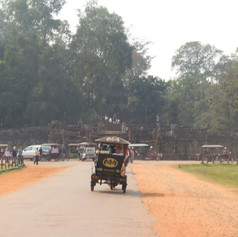
Our first glimpse of Victory Gate, riding with our wonderful guide, Kimsour Keat in his 100% electric car.


Victory gate is one of 5 main entrances to the ancient city of Angkor Thom. Notice the carved heads on the top of the gate which are also reflected in the carvings leading up to the gate.

The carved 4 sided heads represent both gods and demons, and each head faces one of the cardinal directions.
Terrace of the Elephants

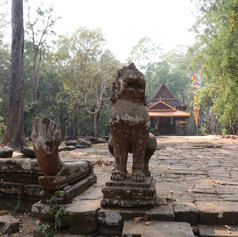
Named for the high relief sculptures of elephants along the walls, the Terrace of the Elephants was built towards the end of the 12th century by King Jayavarman VII.

This terrace was once used as an audience hall for the king to hear the complaints of citizens as well as a space for parades and public ceremonies.

The 300 meter long terrace stretches from the Baphuon temple to the Terrace of the Leper King.





Terrace of the Leper King

Just north of the Terrace of the Elephants, both the inner (pictured here) and the outer walls of the terrace of the Leper King, are completely covered in high relief sculptures.

The sculptures along the inner walls represent demons, princes, princesses, female celestial beings, as well as the multi-headed snake known as the Naga (pictured below). Our guide also pointed out areas depicting levels of heavens, earth, sea, and underworld depicted throughout the interior walls.


The outer walls depict mainly palace scenes as well as some images of Garuda (the half bird/half man mount of Vishnu).


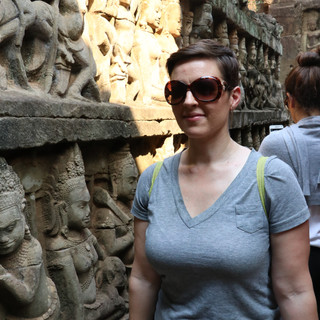








Some believe that the "leper king" statue at the top of the terrace depicts King Yasovarman I, who suffered from leprosy, while others argue it could also represent Yama, the god of death. Either way, this terrace was constructed as a representation of Mount Meru, the center of the Buddhist/Hindu universe.

Here is where Txi had his first, and so memorable, encounter with a jungle bathroom. Niam and Kimsour graciously provided the squat toilet tutorials. What an adventure!
Baphuon

This temple was constructed mainly during the mid 11th century CE.

Can you spy the reclining Buddha on the western side of Baphuon? This impressive sculpture was added in the 16th century to the temple, the restoration of which was started in the 1970's, halted with records lost during the war years, leaving an enormous puzzle of rubble which finally was restored from 1990-2011.

The steep and treacherous climb was well worth it for the lovely views at the top!





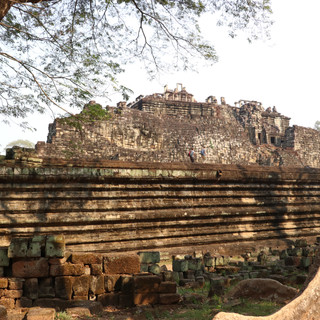


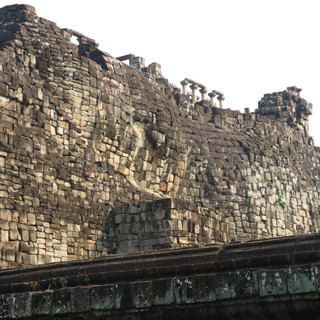

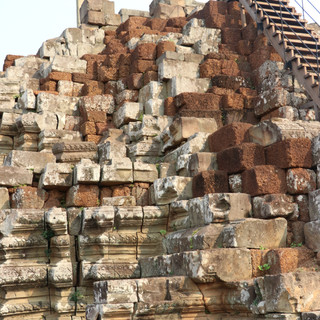










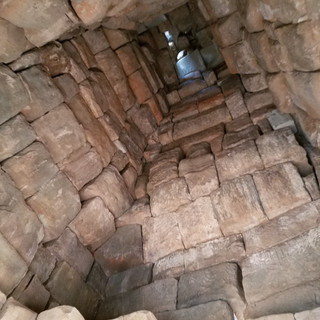


Pretty hard to take a bad shot here when everywhere you look, there's another breathtaking scene...

Scenes at the top of Baphuon...

Phimeanakas

Built in the late 10th century and early 11th century, this structure served as the king's temple.
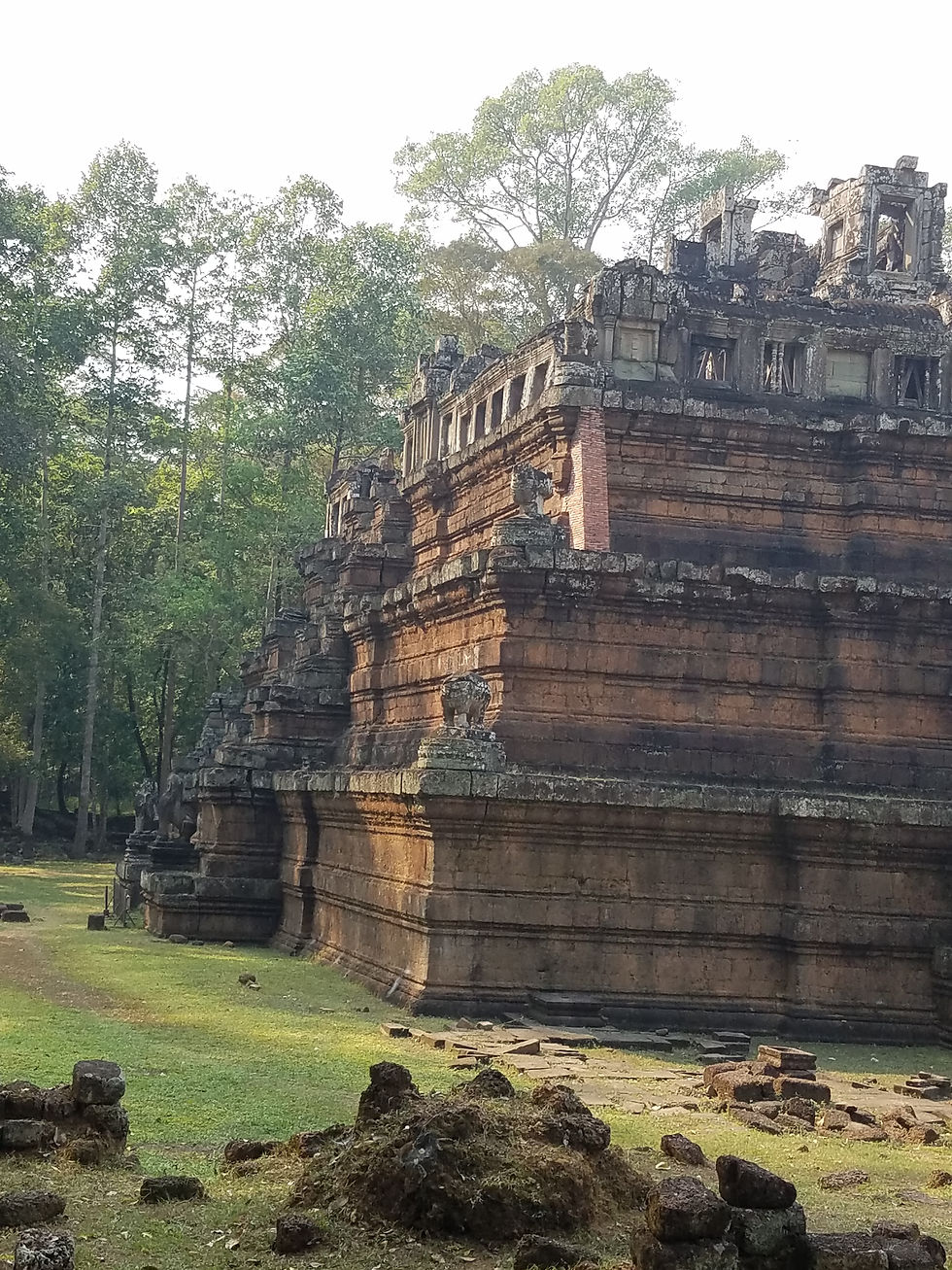
Legend tells of a serpent spirit that lived inside the golden tower which disguised itself as a woman. The king was required to visit her every night in order to prevent his death and strengthen his legacy.


Bayon

Niam was very tired as we approached the last two sites on our tour, so she relaxed outside the Bayon temple, while Txi and I explored inside.

Built in the latter part of the 12th century, Bayon temple is at the center of Angkor Thom and was definitely one of our very favorite sites of the whole tour.


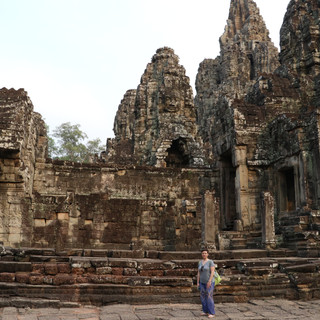










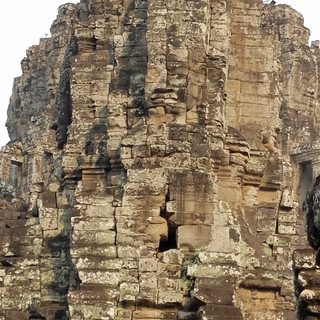


Wandering in and out of this beautiful structure, one could spend hours if not days admiring the architecture, the majestic sculptures, and the intricate carvings.


Walking around the Bayon, we were struck by the beautiful contrasts of the exterior/interior spaces.
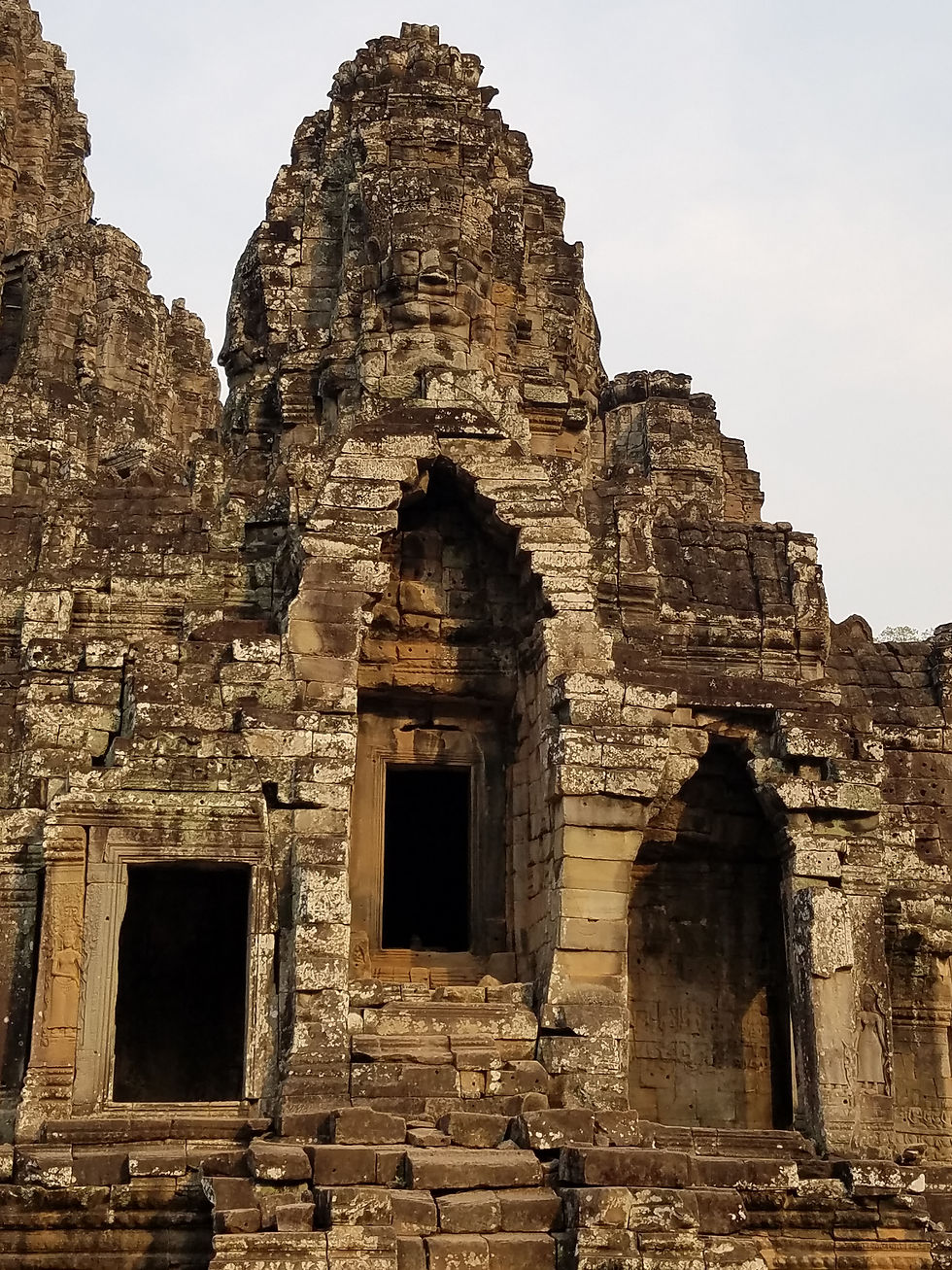

This temple is well known for the huge stone faces of the bodhisattva Avalokiteshvara, the embodiment of mercy and compassion as a figure who possesses all the knowledge to ascend to nirvana and achieve buddhahood, but chooses to stay and help others.

The bodhisattva is protrayed with a head facing each of the cardinal directions and is famous for it's smile, sometimes referred to as the "Mona Lisa of Southeast Asia".

The bodhisattva towers above the Bayon temple.
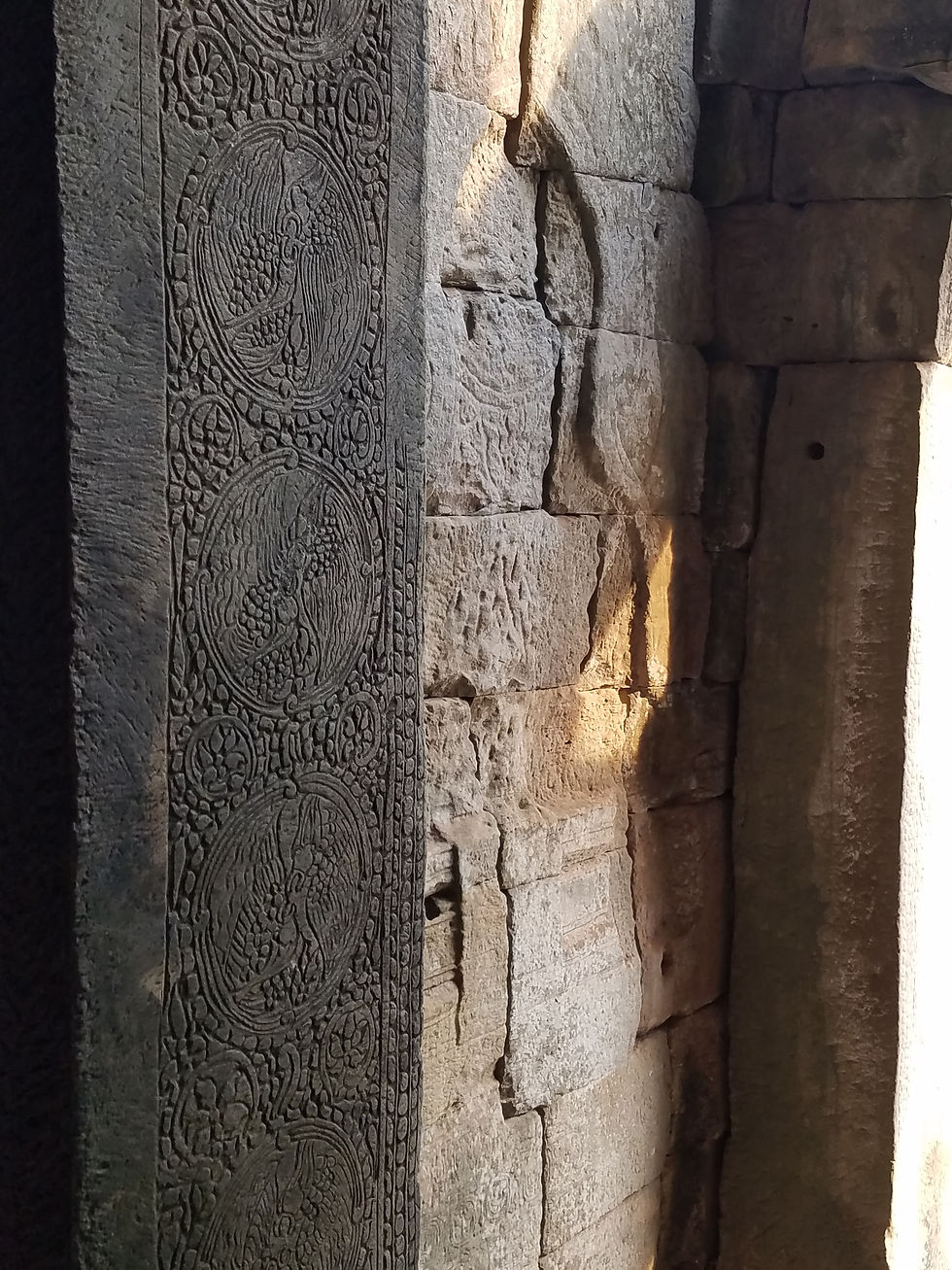
Intricate carvings cover both interior and exterior walls, where, at times, only a hollow shadow remains of the bas relief sculpture that was once there.

There are thousands of figures intricately carved both inside and on the outer walls of this temple. The inner gallery depicts mythical scenes while the outer galleries display historical scenes and images of daily life (fishing, markets, etc.) which is unique to this particular temple.

Apsaras, celestial singers/dancers, dancing on a bed of lotus leafs, a recurring image on the pillars surrounding the Bayon.

Comments